
If you’ve ever published an article that received little to no traffic from Baidu, you’re not alone.
Many website owners focus heavily on keywords and backlinks but overlook one of the most important ranking factors: content quality.
Creating Baidu authority content isn’t about gaming the algorithm. It’s about providing a better experience for your readers.
In this Baidu SEO guide, we’ll break down exactly what Baidu considers high-quality image and text content, including:
- The Basic Standards for Quality Image & Text Content
- The Features of High-Quality Image & Text Content
By the end, you’ll know exactly what it takes to create content that both Baidu and your readers will love.
Basic Standards for Quality Image & Text Content
Before we dive into what makes content truly exceptional, let’s start with the fundamentals.
Think of these as the foundation of every successful article. Even the most insightful content can struggle to perform if the basics aren’t done well.
Let’s walk through each of these standards one by one.
1.1 Keep Images Relevant to the Content
Let’s start with something surprisingly common.
Many content creators spend hours writing an article and then add a few stock photos at the end simply to make the page look more visually appealing.
Unfortunately, that’s not how users or Baidu evaluate content quality.
Images should support and enhance your content, not simply fill empty space on the page.
Before adding an image, ask yourself:
“Does this image help the reader better understand the topic?”
If the answer is no, consider replacing it with something more relevant.

Poor Example (Left): The image has little or no connection to the content and does not add value to the reader.
Good Example (Right): The image is directly related to the content and helps readers better understand the topic.
1.2 Beautiful Layout and Formatting
Now that we’ve covered image relevance, let’s talk about presentation.
Have you ever clicked on an article only to leave after a few seconds because it looked like a giant wall of text?
Most readers have.
That’s why structure and formatting matter just as much as the information itself.
Clear and Well-Structured Content
Readers should be able to quickly understand the flow of your article.
Break your content into logical sections with clear headings and concise paragraphs. Each section should focus on a specific idea, making it easier for readers to follow your reasoning and find the information they’re looking for.
Balanced Image and Text Layout
Images should complement the content rather than dominate it.
Avoid using images that are excessively large or too small. Oversized images can interrupt the reading flow, while tiny images may be difficult to view and provide little value.
A balanced layout creates a smoother reading experience and encourages users to stay on the page longer.
Good Example: The article is well-structured, images are properly sized, and the overall reading experience is smooth and easy.

1.3 Highlight Key Points in Each Section
Here’s something worth remembering:
Most visitors don’t read every word of your article from beginning to end.
Instead, they scan the page looking for answers.
Your job is to make those answers easy to find.
Use Headings Well
Use subheadings to break your article into clear sections. This makes your content easier to read and helps users quickly understand the main ideas.
Use Bold Text for Key Points
Use bold text to highlight important information so readers can quickly spot what matters most.

1.4 Clear and Attractive Images
By now, we’ve discussed where images should be used.
But image quality is just as important as image relevance.
A blurry, stretched, or poorly cropped image can make even expert content appear unprofessional.
High Quality Images
Make sure images are clear and easy to see, with no blur (except old-style photos).
No Visual Issues
Avoid stretched, cropped, distorted images, white borders, or unwanted watermarks. Keep proportions when resizing, and only platform watermarks are allowed.
Consistent Style
Images should look clean and match in style throughout the article. You can enhance them with light editing, but keep everything visually consistent and avoid irrelevant or repeated images.
Good Example: The images are clear and visually appealing, have a consistent style, and match the written content.

1.5 Clear and Easy-to-Understand Writing
Finally, let’s talk about the heart of every great article: the writing itself.
You can have perfect formatting and beautiful images, but if readers struggle to understand your message, they’ll quickly move on.
Make sure your content is complete, logically organized, and free from spelling or grammatical errors. Readers should be able to understand the information without confusion.
Avoid adding unnecessary filler content simply to increase word count. Repetitive or poorly organized writing can frustrate readers and reduce engagement.
Instead, focus on delivering valuable information as clearly and efficiently as possible.
2. Key Features of High-Quality Article and Image Content
If you’ve made it this far, you’re already ahead of many websites.
The standards we’ve covered so far help ensure your content is readable, visually appealing, and user-friendly.
But here’s the thing:
Meeting the minimum requirements doesn’t automatically make content stand out.
The best performing articles usually have a few additional qualities that make readers stay longer, engage more deeply, and trust the information they’re reading.
Let’s take a closer look at what those qualities are.
2.1 Rich and In-Depth Content
One of the biggest differences between average content and exceptional content is depth.
Readers can find basic information almost anywhere. What they’re really looking for is insight, context, and answers they can’t easily get elsewhere.
That’s where in-depth content shines.
Content Depth
High quality content goes beyond simply covering a topic at a surface level.
It should explain concepts thoroughly, answer common questions, and help readers develop a deeper understanding of the subject.
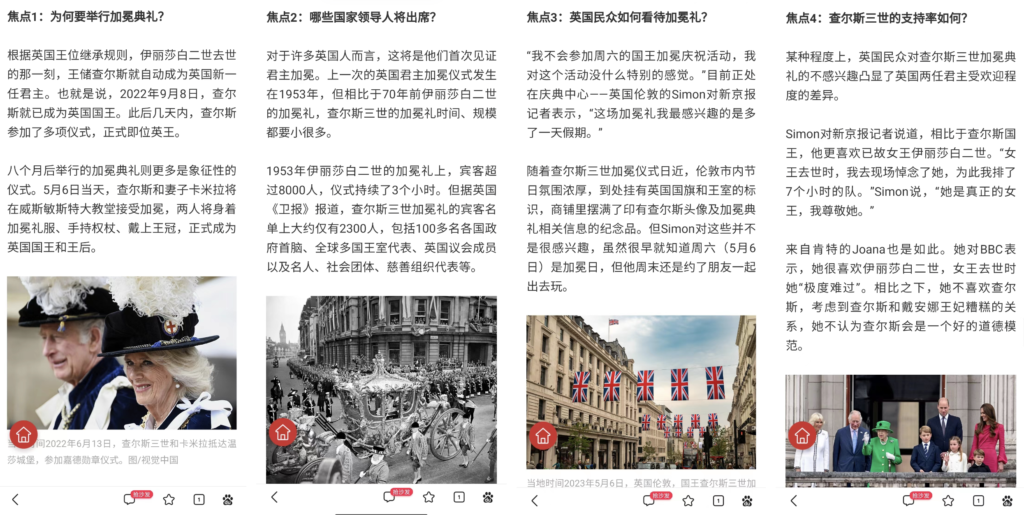
Good Example: The content is professional and in-depth, explaining the full story of the conflict from its background, causes, current situation, to the latest developments.

Create Richer Content Through Multiple Perspectives
Great content rarely looks at a topic from only one angle.
Where possible, explore different perspectives, answer related questions, and provide supporting evidence that helps readers form a complete picture.
We’re sharing a bit more here because depth is often the difference between content that ranks temporarily and content that earns long-term visibility.
You can also improve content richness by combining text, images, charts, infographics, and visual explanations. This creates a more engaging experience while making complex information easier to understand.
2.2 Make It Engaging and Easy to Understand
For professional or educational content, keep your explanations clear and engaging. You can use images, visual data, or animations to help readers understand more easily.
If everything is written in heavy technical language, readers may struggle to follow. So instead, try to turn complex ideas into simple, everyday language. Add visuals where needed to make the content more intuitive and easier to digest.
Good Example: The data is presented through visual charts, clearly showing trends and changes in an intuitive and easy-to-understand way.

2.3 Real and Authentic
Finally, let’s talk about something that both readers and search engines are valuing more than ever: authenticity.
In a world filled with AI-generated and recycled content, real experiences and original perspectives stand out.
Sometimes, a personal insight can be more valuable than hundreds of generic words.
Share Real Experiences
Content based on first hand observations, practical experience, case studies, or genuine expertise often resonates more strongly with readers than generic summaries.
When readers can sense real experience behind the content, they are more likely to trust the information and engage with it.

Good Example (Left): A travel guide based on personal experience, sharing real visits, tips, and impressions.
Poor Example (Right): A basic introduction to the attraction with no personal insights, reviews, or experience sharing.
Finally, let’s sum it up.
Good article and image content should follow five basics: relevant images, clean layout, clear key points, good-looking images, and clear writing.
On top of that, it should also be in-depth, easy to understand, or based on real experience.
Now check your content, does it meet these quality standards for Baidu Search?

Sally is a Baidu Certified Marketing Consultant and Google Certified Analyst with 15+ years of experience. Her expertise includes Chinese-English translation, PR writing & distribution, website localization, WordPress, SEO, video subtitling, and editing. Since 2009, she has been helping international businesses craft and execute effective content marketing strategies tailored to the Chinese market.